
The Challenge
Legal teams often move between long agreements, case material, and research notes before they can answer a focused question. The available Law Assist brief points to a need for legal document analysis that reduces repetitive searching while keeping the reviewer responsible for interpretation. This case study describes the prototype scope, not a measured firm-wide efficiency result.
Our Solution
Sketric shaped an AI-assisted legal document analysis platform around three related jobs: inspect source documents, surface relevant passages for case research, and support contract review. Natural language processing, document processing, machine-learning methods, and text analysis formed the technical foundation. The assistant was positioned as a review aid, so the legal professional could check the evidence and decide what to use rather than accept an unexplained answer.
From Input to Outcome
Bring in the source material
Start with the agreements, case documents, and research material that a legal reviewer needs to inspect together.
Prepare documents for analysis
Process the source text into a form that can be searched, compared, and examined as part of a repeatable review flow.
Surface relevant language
Use NLP and text-analysis methods to identify passages that may answer a research question or deserve closer contract review.
Investigate case context
Let the reviewer move from a question to related document evidence and research context without losing the source material.
Review clauses and findings
Present candidate evidence as an aid to contract review, with the legal professional responsible for interpretation and judgment.
Decide what moves forward
Use the review output to identify the next human action, while keeping unsupported conclusions and autonomous legal advice outside the workflow.
How It Works
A document enters the workspace, is prepared for text analysis, and becomes available to a relevance and research flow. The reviewer can work through document passages, investigate case context, and examine contract language in one place. The documented material does not establish a production corpus, a verified accuracy benchmark, or autonomous legal advice; those are intentionally outside the demonstrated boundary.
Key Features & Capabilities
Document intake: Organizes source files into a repeatable starting point for analysis.
Legal text analysis: Applies NLP and text-processing methods to identify useful language inside long documents.
Relevant passage retrieval: Brings likely evidence into the review flow so a reviewer can inspect the source context.
Case research support: Connects research questions to document evidence and related findings without presenting the result as a final legal opinion.
Contract review assistance: Helps reviewers focus on clauses and language that warrant closer attention.
Human-led review: Keeps interpretation, approval, and next actions with the legal professional.
Document intelligence foundation: Creates a reusable base for future classification, retrieval, permissions, and evaluation work.
Search is not the same as legal review
Finding a phrase inside a document is only one part of the work. A reviewer also needs surrounding context, related material, and enough provenance to decide whether a passage matters. The platform concept focused on shortening that path from a question to reviewable evidence without hiding the source behind a confident summary.
Assist the reviewer instead of replacing judgment
The most important boundary is not a model choice; it is the role the system plays. Law Assist was framed as an AI legal assistant that organizes documents and surfaces candidate evidence. Interpretation, approval, and legal advice remain with the professional who understands the matter and its consequences.
Make document analysis reviewable
The experience connects document intake, text preparation, relevant-passage retrieval, case research, and contract review into one sequence. That structure gives a team a shared way to discuss what the assistant should surface, what the reviewer must verify, and where an unresolved question should be escalated.
Use NLP as a relevance layer, not a promise of certainty
Natural language processing and machine-learning methods can help prioritize language for inspection, but relevance is not the same as correctness. A production implementation would need domain-specific evaluation, source-linked outputs, handling for ambiguous language, and feedback from the legal professionals who use the workflow.
The available result is a prototype direction
The project record supports a legal document analysis platform concept covering document review, case research, and contract assistance. It does not provide enough evidence to carry forward specific time-saved, accuracy, volume, or production-outcome claims, so the story stays focused on the workflow that was demonstrated.
Production proof starts with the document and the reviewer
A responsible next step would use rights-cleared representative files, access controls, a defined evaluation set, reviewer annotations, error categories, and a measured escalation process. The system should show where evidence came from and make it easy to reject or correct an output before it influences a legal decision.
Tech Stack
NLP and text analysis for legal-language processing
Document processing for source-file preparation
Machine-learning methods for relevance and classification support
Retrieval and evidence presentation for reviewer-led research
Human review checkpoints for contract and case-work decisions
Real-World Impact
The useful result was a clearer prototype path for legal document analysis: source material could be organized around review tasks instead of treated as an undifferentiated folder of files. That gives a legal team a concrete way to discuss document intake, evidence retrieval, contract review, and human oversight before committing to a production rollout. The available project material does not establish a firm-wide time saving, accuracy rate, adoption level, revenue impact, or autonomous legal decision-making capability.
Key Highlights
Turns scattered legal source material into a focused review path.
Separates retrieved evidence from the legal professional's judgment.
Creates a concrete prototype boundary for contract review and case research.
Project FAQs
What problem does this legal document analysis platform address?
It addresses the effort required to move through long legal documents, case material, and research notes when a reviewer needs a focused answer. The prototype organizes that work around document analysis, relevant passages, case research, and contract review.
How did the AI legal assistant support reviewers?
It was positioned to prepare documents, surface relevant language, and bring research context into a review flow. The legal professional remained responsible for checking the source, interpreting the material, and deciding what action to take.
Did the platform provide legal advice?
The documented scope supports analysis and review assistance, not autonomous legal advice. Any production version would need to make the difference between retrieved evidence, generated assistance, and professional legal judgment explicit.
Which legal workflows were included?
The available brief names three core jobs: intelligent document analysis, case research support, and contract review assistance. They are treated as prototype workflow areas rather than proof of a complete practice-management system.
Which technologies supported the workflow?
The project record identifies natural language processing, legal AI, document processing, machine learning, and text analysis. It does not document a specific production model, vendor, corpus, or deployment architecture.
Was legal document analysis accuracy measured?
No verified accuracy, precision, recall, latency, adoption, or ROI benchmark is documented in the available material. Those measures would need a representative, rights-cleared evaluation set and review labels from the intended legal workflow.
What would be needed before production use?
The next phase would need privacy and access controls, source-linked evidence, representative documents, reviewer feedback, repeatable evaluation, error handling, auditability, and a clear escalation path when the system cannot support a conclusion.
Explore the services behind this work
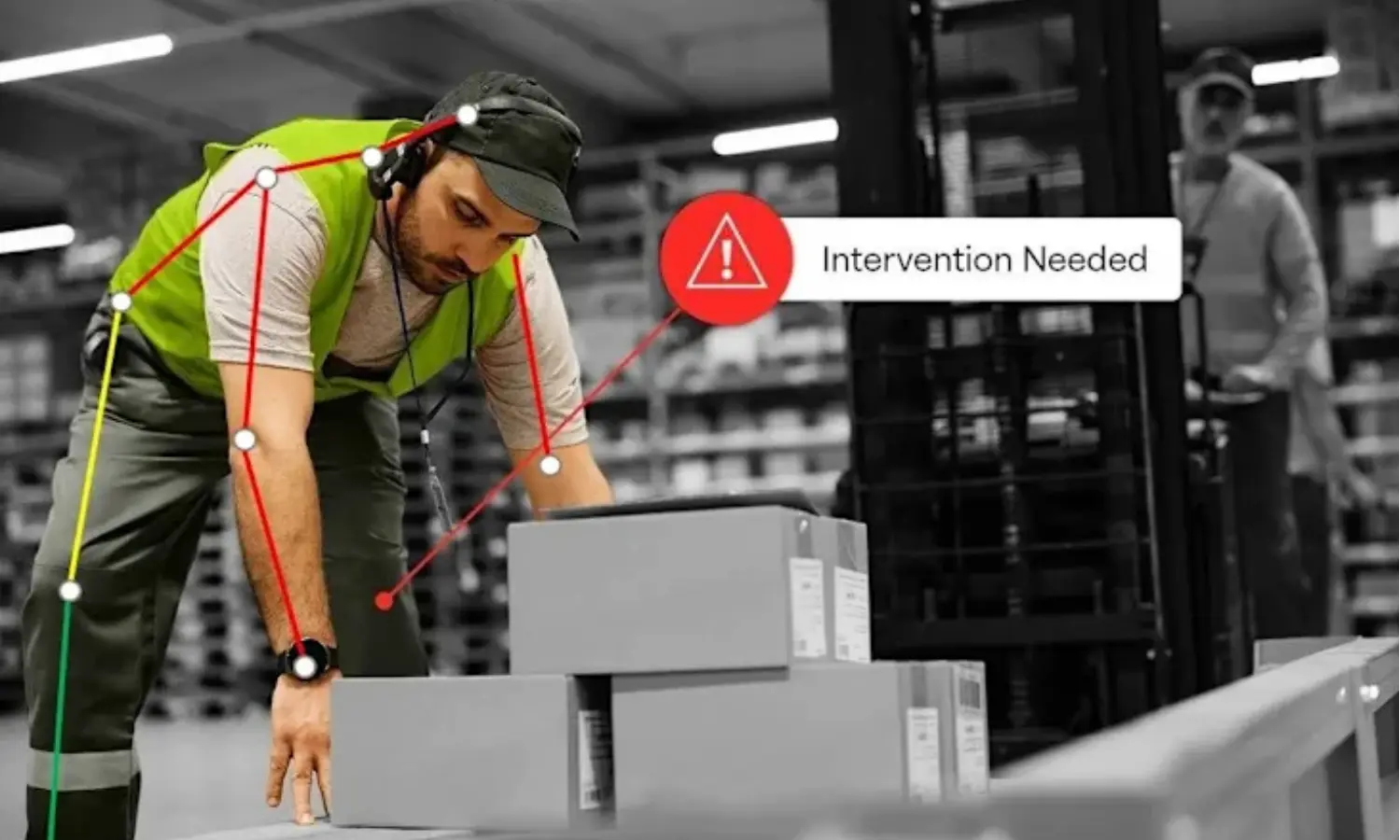
Vergo AI Assistant
Vergo AI Assistant turns work video into pose landmarks, time-coded REBA signals, and a human review path for ergonomic screening without claiming medical diagnosis or validated accuracy.
Read case study →
Color Palette Extraction for Faster Design Decisions
A computer-vision color palette extraction workflow that turns an image into dominant colors and harmony suggestions for design teams.
Read case study →
SiteTrax.io: OCR and Computer Vision for Intermodal Asset Visibility
How Sketric helped SiteTrax.io turn yard imagery into OCR-based asset records for intermodal visibility, yard checks, and logistics-system workflows.
Read case study →Have a project with similar engineering constraints?
Tell us what must be built, measured, integrated, and released. We’ll help define the technical path and the evidence needed to support production claims.