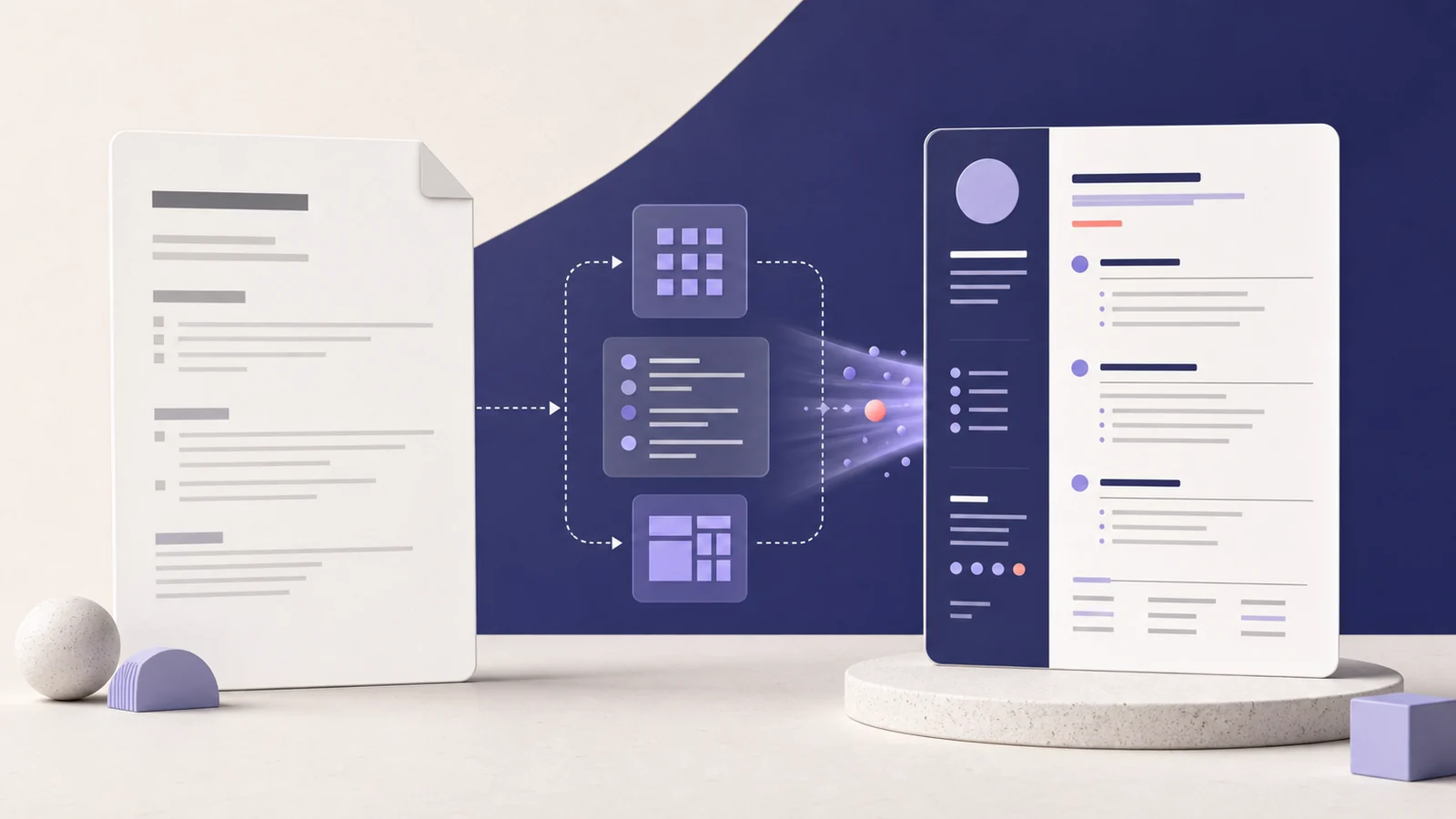
The Challenge
A career-services platform needed a more guided way for job seekers to turn their experience into a finished CV. Starting from a blank document made it easy to lose structure, use inconsistent language, or choose a visually attractive layout that was difficult for applicant-tracking systems to parse. The product brief called for an AI resume builder that could help draft content while keeping the final document editable, professional, and based on reusable templates. The brief did not include a controlled ATS benchmark, so this story focuses on the workflow and product scope rather than claiming a measured compatibility rate.
Our Solution
Sketric built a template-driven AI resume builder that separates candidate content from visual layout. A user can organize profile details, receive suggestions for summary and experience sections, choose a reusable template, and generate a consistent document without rewriting the same content for each design. The system combined NLP-based content assistance, template-driven design automation, and document generation so the output remained easy to revise. Project documentation supports this product direction and technical scope; it does not establish production adoption, ATS pass rate, or hiring outcomes.
From Input to Outcome
Capture the candidate profile
The user gathers the core profile, experience, education, and role context in structured sections instead of starting with a blank document.
Draft the first version
AI-assisted writing suggestions help turn raw details into clearer summaries and experience bullets that the user can inspect and revise.
Review the wording
The user remains responsible for the final story, checking the suggested language for accuracy, relevance, tone, and evidence before it is placed into a template.
Choose a reusable template
A template controls the document hierarchy and layout so the same structured content can be presented in a polished, consistent format.
Apply controlled styling
Design automation applies coordinated color, typography, spacing, and section treatments without requiring the user to format every block manually.
Generate the CV document
The reviewed content and selected presentation are combined into a repeatable resume output that can be edited and prepared for use.
Continue the revision loop
The product keeps content and presentation distinct so a user can refine the wording or try another layout without rebuilding the resume from scratch.
How It Works
The experience moves from structured candidate information to AI-assisted drafting, review, template selection, and document generation. Content and presentation are treated as separate layers: suggestions help a person shape the story, while reusable layouts keep sections, spacing, and visual styling consistent. Project documentation describes the product direction and capabilities, but not a reproducible benchmark for ATS parsing, production usage, or hiring impact.
Key Features & Capabilities
Structured profile intake that gives the resume builder consistent sections to work with
AI-assisted summaries and experience bullets that help users move beyond a blank page
Reusable resume templates that keep content hierarchy consistent across different visual styles
Separation of candidate content from presentation so one profile can support multiple layouts
Controlled color and typography choices for polished design without sacrificing document clarity
ATS-conscious section hierarchy designed to keep essential resume information easy to scan and parse
Document generation that turns the reviewed profile into a repeatable CV output
Edit-and-revise flow that keeps the user responsible for the final wording and claims
A blank page is a product problem, not just a writing problem
Resume creation combines several jobs that are easy to underestimate: collecting information, choosing what matters, writing it clearly, organizing it for scanning, and presenting it with enough visual polish to feel finished. Color CV treated that combined friction as the product opportunity. The goal was not simply to add a text generator, but to guide a person from scattered career details to a document they could review and own.
Keep candidate content separate from presentation
A profile and a template solve different problems. The profile contains the candidate's facts and experience; the template controls hierarchy, spacing, typography, and visual emphasis. Keeping those layers distinct makes iteration easier and gives a career-services team a repeatable way to support more than one visual treatment without asking users to rewrite their information.
Suggestions are useful only when the editing loop stays visible
AI assistance can help users find a starting point, but a resume still represents a real person's history. The workflow therefore needs a clear review step: suggestions can be accepted, rejected, or rewritten, and the user remains responsible for whether a statement is accurate and relevant. This boundary makes the product more trustworthy than an opaque one-click document generator.
Visual variety should not break document structure
A polished CV does not need every section to be redesigned from scratch. Template-driven design automation can provide visual choice while preserving predictable headings, readable spacing, and a consistent information order. That balance is especially important when a resume must work for both a human reader and a software parser.
The project demonstrates a workflow, not a hiring guarantee
Project documentation supports the product direction, the combination of AI-assisted writing and templates, and the documented technical areas. It does not establish a verified ATS pass rate, creation-time improvement, production volume, adoption, hiring impact, or return on investment. A follow-up evaluation should define those measures before they are used as public outcomes.
Tech Stack
AI-assisted content generation for resume summaries and experience language
Natural language processing for structured writing suggestions
Template engine for reusable resume layouts
Document generation pipeline for consistent CV output
Design automation for color, typography, spacing, and section presentation
Structured content model separating candidate data from visual templates
Real-World Impact
The documented outcome is a clearer product path from candidate information to a polished, structured CV. Color CV demonstrates how an AI resume builder can combine writing assistance with template-based design while keeping the person in the editing loop. Project documentation does not verify creation-speed, ATS-compatibility, resume-volume, adoption, hiring, or revenue outcomes; each would need a traceable baseline and controlled measurement before being presented as a result.
Project FAQs
What problem does the Color CV resume builder solve?
It addresses the blank-page problem by combining structured profile input, AI-assisted writing suggestions, reusable templates, and document generation in one guided resume-creation workflow.
Is Color CV an AI resume builder?
Yes. The documented product direction combines AI and NLP-based content assistance with template-driven design and resume document generation. Project documentation does not specify a single model or provider.
How does the workflow keep the user in control?
The system provides suggestions, but the user reviews and edits the wording before the CV is generated. That keeps responsibility for accuracy, tone, and career claims with the person creating the resume.
Can one profile use more than one resume template?
The product was designed around a separation between candidate content and visual presentation, making reusable layouts a core capability. Project documentation does not record the final number of templates.
Was ATS compatibility measured?
No controlled ATS benchmark is documented. A representative test set, parser coverage, and measurement method would be needed before reporting a compatibility rate.
What technologies were used?
Project documentation identifies AI, natural language processing, document generation, design automation, and a template engine as the main technical areas.
Did the project prove better hiring outcomes?
Project documentation does not establish a hiring, interview, adoption, or revenue outcome. Those results would require product-usage records and a defined comparison group.
What should be tested next?
A next evaluation should measure time to a reviewed CV, content-edit quality, template consistency, parsing behavior across representative ATS tools, and user feedback on the AI suggestions.
Explore the services behind this work
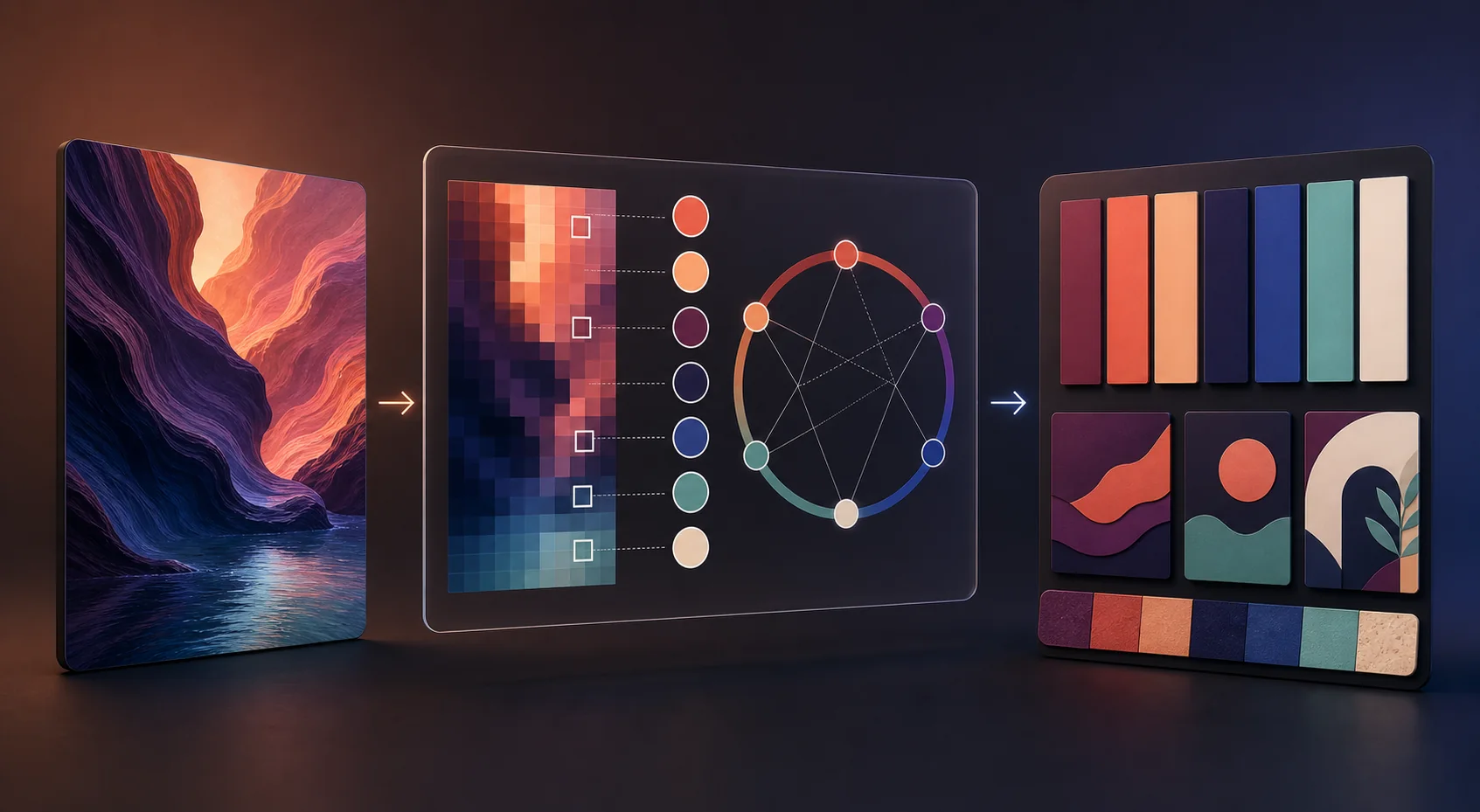
Color Palette Extraction for Faster Design Decisions
A computer-vision color palette extraction workflow that turns an image into dominant colors and harmony suggestions for design teams.
Read case study →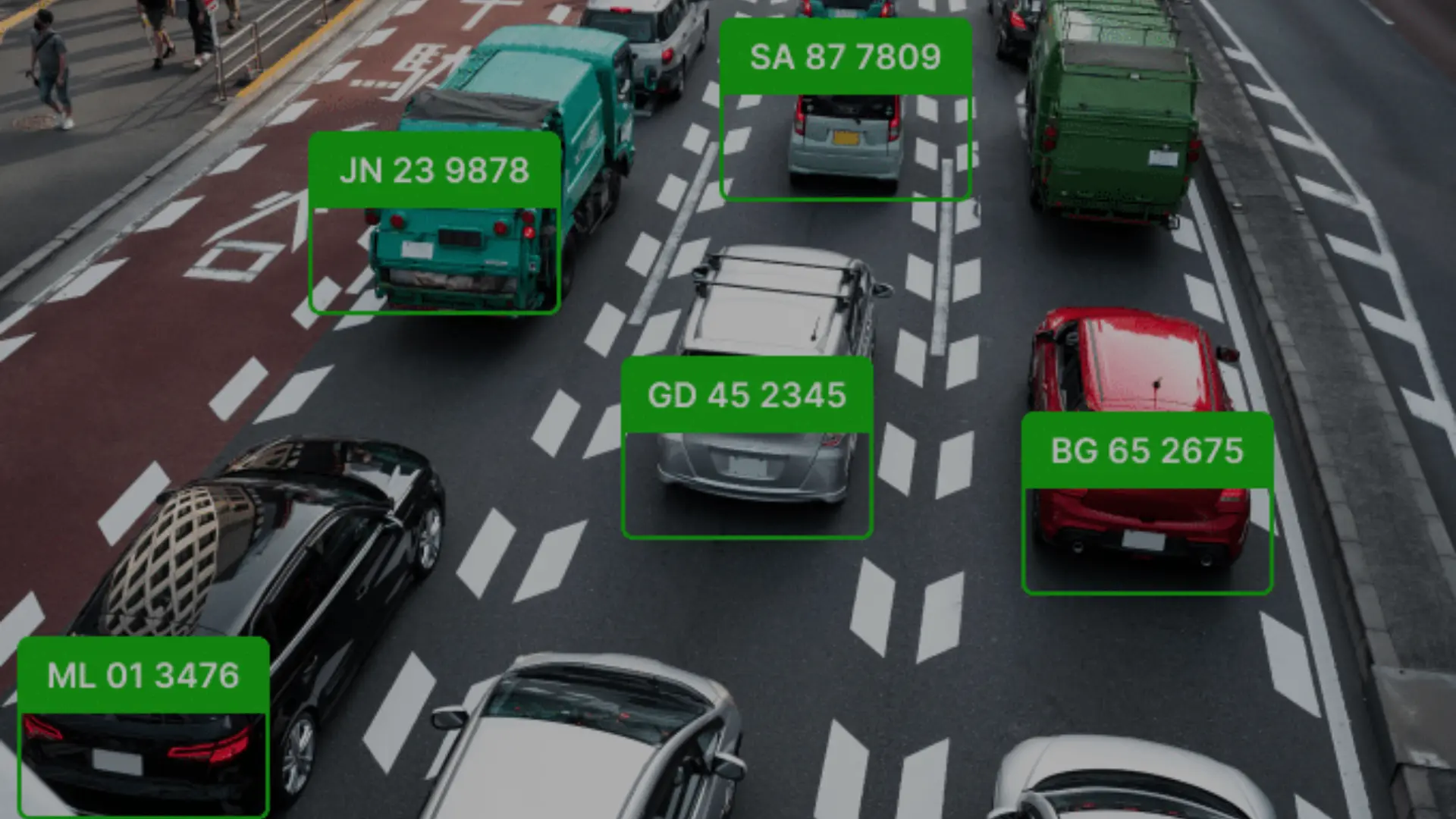
PlateSniper: AI-Powered License Plate Recognition
AI-powered license plate recognition system that automates parking violation detection across the City of Ontario with 95%+ accuracy.
Read case study →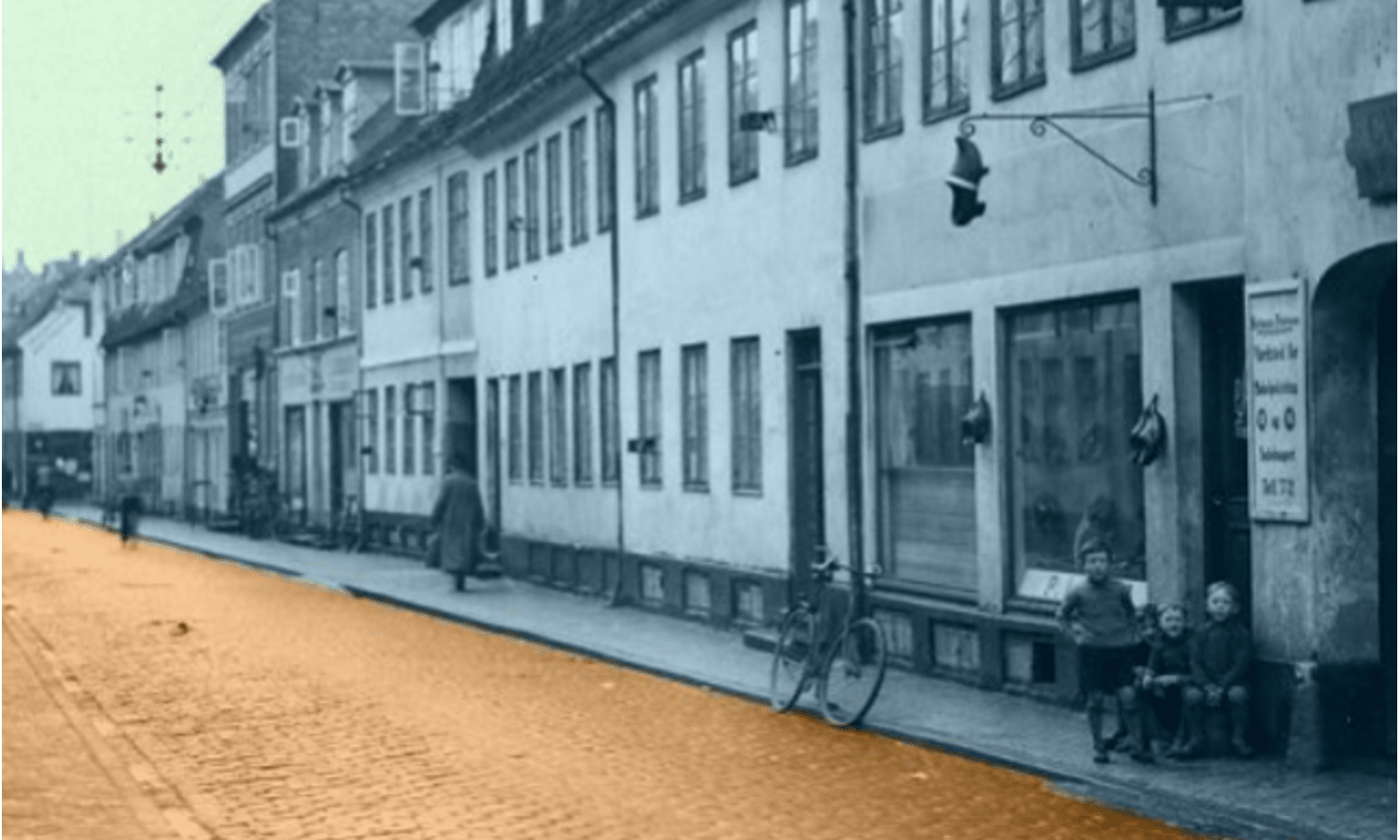
AI Guide - Museum Helsingør
Revolutionary AI-powered museum guide system providing personalized tours and cultural experiences using advanced RAG-LLM technology.
Read case study →Have a project with similar engineering constraints?
Tell us what must be built, measured, integrated, and released. We’ll help define the technical path and the evidence needed to support production claims.